Composed leadership
Walnut tones, charcoal seating and quiet neutrals for a formal, cohesive office.

MATERIALS & FINISHES
Surface, grain, touch and colour shape an office’s character. Compare the material, its construction and its care requirements together.
Compare material directions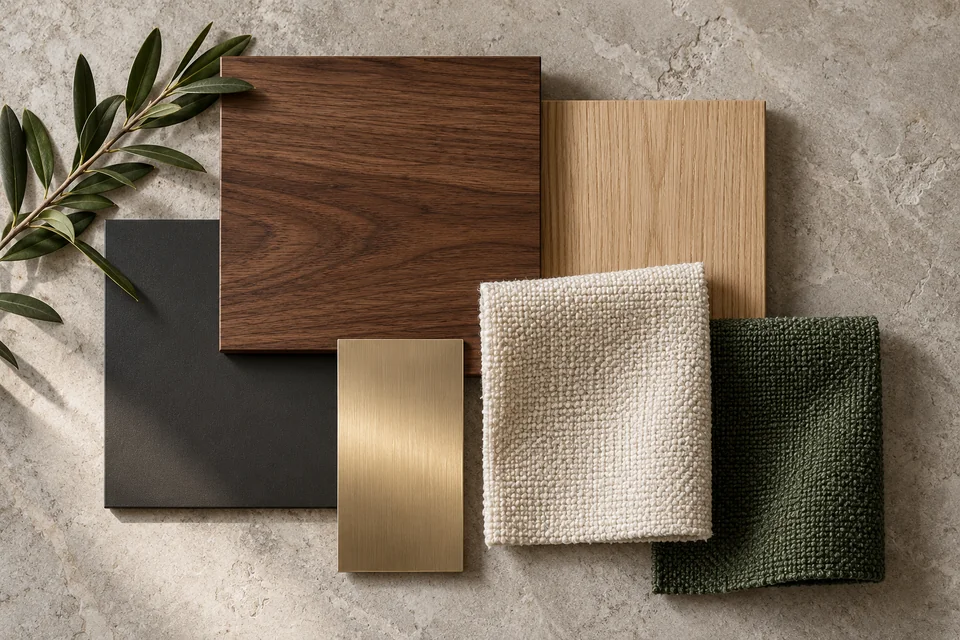
These are starting directions for discussion. Confirm actual samples and product availability before selection.
Walnut tones, charcoal seating and quiet neutrals for a formal, cohesive office.
Lighter wood tones and muted textiles for shared workplaces and everyday use.
Soft neutrals, deep green accents and wood tones for reception and lounge settings.
A finish name alone does not describe the entire furniture construction.
| Direction | What to compare | What to request |
|---|---|---|
| Laminate surfaces | Surface grade, substrate, edge treatment and the expected use. | Physical sample, construction details and cleaning instructions. |
| Wood & veneer | Grain variation, coating, edge details and sample matching. | Approved finish sample and product-specific care guidance. |
| Upholstery | Texture, colour, cleaning method and suitability for the selected chair. | Fabric code, performance data and an application confirmation. |
| Metal finishes | Coating, sheen, colour consistency and exposed details. | Finish sample and maintenance guidance. |
SAMPLE APPROVAL
Review samples beside the room’s flooring, wall finishes and lighting. Record the approved finish codes against the furniture schedule so later decisions refer to the same selection.
Explore the specification hubBRING THE DETAILS TOGETHER
Record your preferred material direction in the project brief.